"First, I found the whole modern world talking scientific fatalism; saying that everything is as it must always have been, being unfolded without fault from the beginning. The leaf on the tree is green because it could never have been anything else. Now, the fairy-tale philosopher is glad that the leaf is green precisely because it might have been scarlet. He feels as if it had turned green an instant before he looked at it. He is pleased that snow is white on the strictly reasonable ground that it might have been black. Every color has in it a bold quality as of choice; the red of the garden roses is not only decisive but dramatic, like suddenly spilt blood. He feels that something has been done."
--G.K. Chesterton, in his essay "The Ethics of Elfland", part of the book Orthodoxy
Wednesday, June 5, 2013

Big Fish, Bigger Pond: Reflections on the Michigan Division 1 High School State Track Meet
The forecast called for thunderstorms, but the morning is warm and clear when I arrive at East Kentwood high school for the Michigan D1 Track and Field State Meet. It seems the weather is always hot on that first weekend in June. Waves of heat rise off the track and the athletes wait nervously under the bleachers, trying to follow their coaches’ advice and stay out of the sun. In the stands, the spectators glisten with sweat. I remember one State meet that was so hot the event staff set up misting machines for the runners to stand under in an attempt to stave off heat stroke.
It’s no small thing to qualify for this meet. The runners, jumpers, and throwers around me---warming up on the infield, shaking themselves loose at the discus or long-jump pits---are the best of the best in Michigan. Exceptional athletes, all of them. This year, for the first time, I’m not here to compete myself or to watch a younger sibling compete. I’m here as a coach, with a job to do. Sort of.
Unfortunately, I’ve never been very good at attending these meets, not when I was in high school, not now. I get all riled up, agitated, restless. I want to watch the races, and at the same time, I don’t want to. Somehow, during the most important events, the ones that I used to run and should theoretically care about the most, I find myself walking in the opposite direction of the track or watching with only a peripheral interest, as if the race were little more than a commercial on TV. I detach.
Why do I do this?
While standing near the pole vault pits watching one of my athletes jump, I run into an old teammate of mine from high school. Five years ago, we competed in this meet together as members of our school record-holding 4x800 relay team. I’m very happy to see her again.
Happy, but also mildly unsettled.
Though I was a little bit faster than her in high school, this girl had walked onto a D1 track team and consequently, by the end of her career there, became a phenomenal runner. And I mean phenomenal. This girl is now leaps and bounds ahead of me. As we stand there catching up, I find myself making excuses internally, justifying why I chose to go to a D3 college, and imagining what I could have accomplished had I decided to go D1 as she had (not that any D1 schools were remotely interested in me). I want to believe that my potential is just as valuable as hers. That she is not really better than me.
Ok, so I’m jealous.
As much as I hate to admit it, it’s for this reason that the State meets always make me so restless, unwilling to watch those events I have every reason to be interested in. In high school I didn’t like feeling like a small fish in a big pond. And now I’m no longer a fish and this isn’t even my pond, but I still find myself envious of these teenagers who are faster than I ever was or will be.
Later, after the meet, I go for a run to clear my mind. It’s not so much my jealousy that’s the problem---although that certainly is a problem---it’s the assumption behind it that’s in error, I realize. It’s the idea that, at the end of the day, shaving a few seconds off my 800 time really matters, really means something about my identity and worth. It’s the desire for brief moments of glory to last longer than their due.
It is so easy to think about life in the immediate present, with it’s trivial cares and worries, and forget to take a step back and remember what it looks like from a bird’s-eye view. Setting and achieving goals in athletics or elsewhere is a great thing and has brought me much happiness over the years, but like nearly every accomplishment, it is short-lived. A flash in the pan.
Every single one of the athletes who competed at the State meet will one day lose their speed or their height or their power. Probably one day soon. It’s a victory to be held loosely lest the acid of bitterness corrode whatever lasting satisfaction it did bring. I don’t want that to happen to me, even when the day comes (which I’m sure is not far down the road) when the athletes I now coach are able to leave me in their dust.
While we were watching the girls’ 2-mile relay, my brother elbowed me and pointed down the bleachers. “Britta, look,” he said excitedly. “I’m pretty sure that’s Austin Sanders. See him? The kid with the dreads.”
I followed his finger to a muscled black man finding a seat in the stands below us. I didn’t recognize him.
“Who?” I asked.
“Austin Sanders. He won the 100 and the 200 last year. He’s super fast.”
I studied him for a moment, as he sat with his friends in the stands, watching the first heat of the relay. He was the superstar of the meet last year, but today no one---besides my brother and maybe a handful of other people---would know him from Joe. He was just a member of the crowd. Like me.
Of course, this Austin kid is probably running for some big name D1 university now with even more accomplishments under his belt, but I still felt a brief moment of solidarity with him. Today is not his day---not anymore---and it’s not mine either. It’s time I let it go.
It’s no small thing to qualify for this meet. The runners, jumpers, and throwers around me---warming up on the infield, shaking themselves loose at the discus or long-jump pits---are the best of the best in Michigan. Exceptional athletes, all of them. This year, for the first time, I’m not here to compete myself or to watch a younger sibling compete. I’m here as a coach, with a job to do. Sort of.
Unfortunately, I’ve never been very good at attending these meets, not when I was in high school, not now. I get all riled up, agitated, restless. I want to watch the races, and at the same time, I don’t want to. Somehow, during the most important events, the ones that I used to run and should theoretically care about the most, I find myself walking in the opposite direction of the track or watching with only a peripheral interest, as if the race were little more than a commercial on TV. I detach.
Why do I do this?
While standing near the pole vault pits watching one of my athletes jump, I run into an old teammate of mine from high school. Five years ago, we competed in this meet together as members of our school record-holding 4x800 relay team. I’m very happy to see her again.
Happy, but also mildly unsettled.
Though I was a little bit faster than her in high school, this girl had walked onto a D1 track team and consequently, by the end of her career there, became a phenomenal runner. And I mean phenomenal. This girl is now leaps and bounds ahead of me. As we stand there catching up, I find myself making excuses internally, justifying why I chose to go to a D3 college, and imagining what I could have accomplished had I decided to go D1 as she had (not that any D1 schools were remotely interested in me). I want to believe that my potential is just as valuable as hers. That she is not really better than me.
Ok, so I’m jealous.
As much as I hate to admit it, it’s for this reason that the State meets always make me so restless, unwilling to watch those events I have every reason to be interested in. In high school I didn’t like feeling like a small fish in a big pond. And now I’m no longer a fish and this isn’t even my pond, but I still find myself envious of these teenagers who are faster than I ever was or will be.
Later, after the meet, I go for a run to clear my mind. It’s not so much my jealousy that’s the problem---although that certainly is a problem---it’s the assumption behind it that’s in error, I realize. It’s the idea that, at the end of the day, shaving a few seconds off my 800 time really matters, really means something about my identity and worth. It’s the desire for brief moments of glory to last longer than their due.
It is so easy to think about life in the immediate present, with it’s trivial cares and worries, and forget to take a step back and remember what it looks like from a bird’s-eye view. Setting and achieving goals in athletics or elsewhere is a great thing and has brought me much happiness over the years, but like nearly every accomplishment, it is short-lived. A flash in the pan.
Every single one of the athletes who competed at the State meet will one day lose their speed or their height or their power. Probably one day soon. It’s a victory to be held loosely lest the acid of bitterness corrode whatever lasting satisfaction it did bring. I don’t want that to happen to me, even when the day comes (which I’m sure is not far down the road) when the athletes I now coach are able to leave me in their dust.
While we were watching the girls’ 2-mile relay, my brother elbowed me and pointed down the bleachers. “Britta, look,” he said excitedly. “I’m pretty sure that’s Austin Sanders. See him? The kid with the dreads.”
I followed his finger to a muscled black man finding a seat in the stands below us. I didn’t recognize him.
“Who?” I asked.
“Austin Sanders. He won the 100 and the 200 last year. He’s super fast.”
I studied him for a moment, as he sat with his friends in the stands, watching the first heat of the relay. He was the superstar of the meet last year, but today no one---besides my brother and maybe a handful of other people---would know him from Joe. He was just a member of the crowd. Like me.
Of course, this Austin kid is probably running for some big name D1 university now with even more accomplishments under his belt, but I still felt a brief moment of solidarity with him. Today is not his day---not anymore---and it’s not mine either. It’s time I let it go.
Saturday, May 18, 2013
My Top Reads for Summer 2013
Yesterday at work I wrote copy for a marketing email advertising select summer reads for a couple publishing houses. "Start your summer reading adventure today," it read. "Find the perfect book."
I found it likely that I wouldn't agree with all the books on their list, so I decided to make my own. In any case, as an English Writing major, I am frequently asked to recommend books and often find myself suddenly blanking on anything beyond a title or two. So in the future, I will just refer those people to this page. Here is my list of ten great summer (or anytime) reads:
 1. The God of Small Things by Arundhati Roy---I will never stop recommending this novel. Set in a small town in 1969 India, The God of Small Things poignantly captures the innocence of childhood through the eyes of twins Estha and Rahel. Their narrow perspective is rivaled only by the even narrower (and not so innocent) perspective of the adults in their lives who have rendered themselves completely blind to truth. Brilliant characterization, brilliant narrative structure, and magical language. The prose reads like poetry and carries a richness unparalleled to any novel I have ever read. Where else can you read sentences like, "Heaven opened and the water hammered down, reviving the reluctant old well, greenmossing the pigless pigsty, carpet bombing still, tea-colored puddles the way memory bombs still, tea-colored minds"?
 2. The Brothers K by David James Duncan---This book is not to be confused with The Brothers Karamazov by Fyodor Dostoevsky (also a good book, though of a very different kind). In this case the K refers to a strike out, as in baseball, or, as one character puts it, "to come unglued, come to grief, come to blows, come to nothing." A sprawling, genre-mixing novel, The Brothers K chronicles several decades of the Chance family, especially the four brothers who come of age during the upheavals of the 60s. I love this book because while it is moving and emotionally deep, it is also laugh-out-loud funny.
 3. The Princess and the Goblin by George McDonald---For those of you unfamiliar with the works of George McDonald, think C.S. Lewis plus a little more magic and mystery (McDonald was a major influence in the writings of Lewis). Like The Chronicles of Narnia, this loosely allegorical fairy tale is for adults just as much as it is for children. It's a quick read, non-intimidating, and you can get it for free on Kindle. But don't be deceived by its simplicity: The Princess and the Goblin was one of the most influential books I read in 2011.
 4. Angela's Ashes by Frank McCourt---This memoir won the Pulitzer Prize for Biography in 1997, and for good reason. McCourt tells the story of his childhood in America and Ireland at the height of the Great Depression, growing up poor, hungry, and largely unsupervised. The narrative is both fascinating and tragic. As McCourt himself says, "Worse than the ordinary miserable childhood is the miserable Irish childhood, and worse yet is the miserable Irish Catholic childhood." But I've never seen anyone capture the first-person experience of a three-year-old so accurately, nor have I been so caught up in the antics of a simultaneously world-wise and naive little boy.
 5. Infidel by Ayaan Hirsi Ali---Ayaan is a controversial figure in politics, but I recommend this book more for its anthropological insights than for the political and religious conclusions to which Ayaan comes at the end of her memoir. Ayaan was born in Somalia, grew up Somalia, Kenya, Ethiopia, and Saudi Arabia, and obtained asylum in the Netherlands to escape an arranged marriage when she in her early twenties. She eventually became a member of the Dutch Parliament and now lives in the United States. Infidel tells of her Islamic and deeply patriarchal childhood, her growing disillusionment with her heritage, and her eventual turn to atheism and political activism. But I like it most for its fascinating accounts of life in East Africa.
 6. Walking on Water: Reflections on Faith and Art by Madeleine L'Engle---At this stage in my life, Walking on Water has offered me more encouragement and direction than any other piece of literature. Most people know L'Engle as the author of the children's book A Wrinkle in Time, but this slim volume of non-fiction is my favorite of her works that I have read. My copy of the book, slyly gifted to me last summer, is thoroughly marked up and underlined, evidence of the many times it has articulated thoughts that resound deep within me. Any aspiring artist---whether writer, dancer, painter, or musician---who wants to understand the connections between art, God, and hope, who wants to "find the cosmos in the chaos," needs to read this book.
 7. Cat's Eye, The Robber Bride, or anything else by Maraget Atwood---Atwood is a master of characterization. Every time I read her, I am blown away by her command of language and her abundance of vivid detail. Because she is such a prolific writer, many of Atwood's novels are still on my to-read list, but the three that I have read have completely entranced me with their worlds.
 8. The Stream and the Sapphire by Denise Levertov---Not many people read books of poetry anymore, including myself, but this collection of poems is one that I eagerly sought and purchased after I got a taste of Levertov in one of my college literature courses. The poems deal with themes of faith and doubt and, as Levertov remarks in the Forward, "to some extent trace my slow movement from agnosticism to Christian faith." To get an idea of what her poetry is like, look up "The Avowal," one of my favorite poems in this little book.
 9. Anna Karenina by Leo Tolstoy---I meant to read this novel ever since one of my college professors called it possibly the greatest work of fiction ever written, but it took me until this winter to finally get around to it. It's a hefty book, well over 700 pages in my edition, and intimidating to begin. Well worth the effort, though. Tolstoy has amazing insight into the fickle human mind. If you've seen the recently-released film version of this book, don't rule it out based on that unfortunate interpretation.
 10. Gilead by Marilynne Robinson---Gilead is epistolary novel, an extended letter written by a dying father and pastor to his young son. This is by far the most difficult book on my list to describe because it is so unlike any other novel I have read. Simple, unornamented language and plot yet heart-breakingly beautiful. It is a book that will have you underlining. Deeply spiritual, full of faith and doubt and all the right questions. The narrator, Rev. John Ames, is the most ordinary and yet possibly the most profound character in all the contemporary literature I have read.
I found it likely that I wouldn't agree with all the books on their list, so I decided to make my own. In any case, as an English Writing major, I am frequently asked to recommend books and often find myself suddenly blanking on anything beyond a title or two. So in the future, I will just refer those people to this page. Here is my list of ten great summer (or anytime) reads:
 1. The God of Small Things by Arundhati Roy---I will never stop recommending this novel. Set in a small town in 1969 India, The God of Small Things poignantly captures the innocence of childhood through the eyes of twins Estha and Rahel. Their narrow perspective is rivaled only by the even narrower (and not so innocent) perspective of the adults in their lives who have rendered themselves completely blind to truth. Brilliant characterization, brilliant narrative structure, and magical language. The prose reads like poetry and carries a richness unparalleled to any novel I have ever read. Where else can you read sentences like, "Heaven opened and the water hammered down, reviving the reluctant old well, greenmossing the pigless pigsty, carpet bombing still, tea-colored puddles the way memory bombs still, tea-colored minds"?
 2. The Brothers K by David James Duncan---This book is not to be confused with The Brothers Karamazov by Fyodor Dostoevsky (also a good book, though of a very different kind). In this case the K refers to a strike out, as in baseball, or, as one character puts it, "to come unglued, come to grief, come to blows, come to nothing." A sprawling, genre-mixing novel, The Brothers K chronicles several decades of the Chance family, especially the four brothers who come of age during the upheavals of the 60s. I love this book because while it is moving and emotionally deep, it is also laugh-out-loud funny.
 3. The Princess and the Goblin by George McDonald---For those of you unfamiliar with the works of George McDonald, think C.S. Lewis plus a little more magic and mystery (McDonald was a major influence in the writings of Lewis). Like The Chronicles of Narnia, this loosely allegorical fairy tale is for adults just as much as it is for children. It's a quick read, non-intimidating, and you can get it for free on Kindle. But don't be deceived by its simplicity: The Princess and the Goblin was one of the most influential books I read in 2011.
 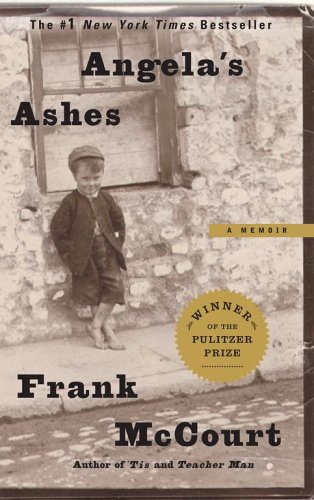 4. Angela's Ashes by Frank McCourt---This memoir won the Pulitzer Prize for Biography in 1997, and for good reason. McCourt tells the story of his childhood in America and Ireland at the height of the Great Depression, growing up poor, hungry, and largely unsupervised. The narrative is both fascinating and tragic. As McCourt himself says, "Worse than the ordinary miserable childhood is the miserable Irish childhood, and worse yet is the miserable Irish Catholic childhood." But I've never seen anyone capture the first-person experience of a three-year-old so accurately, nor have I been so caught up in the antics of a simultaneously world-wise and naive little boy.
 5. Infidel by Ayaan Hirsi Ali---Ayaan is a controversial figure in politics, but I recommend this book more for its anthropological insights than for the political and religious conclusions to which Ayaan comes at the end of her memoir. Ayaan was born in Somalia, grew up Somalia, Kenya, Ethiopia, and Saudi Arabia, and obtained asylum in the Netherlands to escape an arranged marriage when she in her early twenties. She eventually became a member of the Dutch Parliament and now lives in the United States. Infidel tells of her Islamic and deeply patriarchal childhood, her growing disillusionment with her heritage, and her eventual turn to atheism and political activism. But I like it most for its fascinating accounts of life in East Africa.
 6. Walking on Water: Reflections on Faith and Art by Madeleine L'Engle---At this stage in my life, Walking on Water has offered me more encouragement and direction than any other piece of literature. Most people know L'Engle as the author of the children's book A Wrinkle in Time, but this slim volume of non-fiction is my favorite of her works that I have read. My copy of the book, slyly gifted to me last summer, is thoroughly marked up and underlined, evidence of the many times it has articulated thoughts that resound deep within me. Any aspiring artist---whether writer, dancer, painter, or musician---who wants to understand the connections between art, God, and hope, who wants to "find the cosmos in the chaos," needs to read this book.
 7. Cat's Eye, The Robber Bride, or anything else by Maraget Atwood---Atwood is a master of characterization. Every time I read her, I am blown away by her command of language and her abundance of vivid detail. Because she is such a prolific writer, many of Atwood's novels are still on my to-read list, but the three that I have read have completely entranced me with their worlds.
 8. The Stream and the Sapphire by Denise Levertov---Not many people read books of poetry anymore, including myself, but this collection of poems is one that I eagerly sought and purchased after I got a taste of Levertov in one of my college literature courses. The poems deal with themes of faith and doubt and, as Levertov remarks in the Forward, "to some extent trace my slow movement from agnosticism to Christian faith." To get an idea of what her poetry is like, look up "The Avowal," one of my favorite poems in this little book.
 9. Anna Karenina by Leo Tolstoy---I meant to read this novel ever since one of my college professors called it possibly the greatest work of fiction ever written, but it took me until this winter to finally get around to it. It's a hefty book, well over 700 pages in my edition, and intimidating to begin. Well worth the effort, though. Tolstoy has amazing insight into the fickle human mind. If you've seen the recently-released film version of this book, don't rule it out based on that unfortunate interpretation.
 10. Gilead by Marilynne Robinson---Gilead is epistolary novel, an extended letter written by a dying father and pastor to his young son. This is by far the most difficult book on my list to describe because it is so unlike any other novel I have read. Simple, unornamented language and plot yet heart-breakingly beautiful. It is a book that will have you underlining. Deeply spiritual, full of faith and doubt and all the right questions. The narrator, Rev. John Ames, is the most ordinary and yet possibly the most profound character in all the contemporary literature I have read.
Tuesday, May 14, 2013
"So would I learn to attain freefall, and float"
My memory of that day is hazy. A mist obscures the details, blurs the edges. Dream-like. Shimmering. I am a little afraid to touch it for fear it will come suddenly into focus. Flood me with the four-years-worth of memories it represents, the combination of which is too bright to look at.
Has it possibly been a whole year since I walked down the steps of Edman Chapel, diploma in hand, drowning happily in a synthetic blue robe?
Sunday marked the one-year anniversary of my college graduation. The weather this time around was much like it was then. Cold and wet. Mothers’ Day. I felt an obligation and yet a disinclination to write this blog post as I moped around the house, trying to figure out why I was in such a strange mood.
At this milestone, I feel like I’m supposed to have some list of profound insights, truths I have gathered over the past year that will carry me into the next. In reality, I’m just as perplexed by life as I was when I graduated. The future remains just as opaque and my next step just as shaky and unsure.
The difference is, I suppose, that this uncertainty doesn’t bother me as much as it did then. You get used to walking around in the dark after a while, even if your eyes never fully adjust. You realize that no one really knows what they are doing, that everyone---even those much older or more experienced---are 90% faking it.
A year isn’t really that long of a time. Most lessons worth learning take decades. I think I anticipated I would only need a few months to find my feet, to uncover some path with clearly marked road signs and a straightforward direction. I didn’t expect a dream job---but I think I expected at least a dream plan.I’m not sure I want that anymore though. I sort of like the forest I’m lost in.
What can I say then to those who have donned the cap and gown this spring, who also are stepping out of the structure of a school system for the first time? Only this:
Life happens and it cannot be stopped. Unexpected and ridiculous things will happen. This is a good thing. No matter what your plans are, a year from now you will look back and be surprised by how you got there.
I do not confess to understand a thing about why or how.
Has it possibly been a whole year since I walked down the steps of Edman Chapel, diploma in hand, drowning happily in a synthetic blue robe?
Sunday marked the one-year anniversary of my college graduation. The weather this time around was much like it was then. Cold and wet. Mothers’ Day. I felt an obligation and yet a disinclination to write this blog post as I moped around the house, trying to figure out why I was in such a strange mood.
At this milestone, I feel like I’m supposed to have some list of profound insights, truths I have gathered over the past year that will carry me into the next. In reality, I’m just as perplexed by life as I was when I graduated. The future remains just as opaque and my next step just as shaky and unsure.
The difference is, I suppose, that this uncertainty doesn’t bother me as much as it did then. You get used to walking around in the dark after a while, even if your eyes never fully adjust. You realize that no one really knows what they are doing, that everyone---even those much older or more experienced---are 90% faking it.
A year isn’t really that long of a time. Most lessons worth learning take decades. I think I anticipated I would only need a few months to find my feet, to uncover some path with clearly marked road signs and a straightforward direction. I didn’t expect a dream job---but I think I expected at least a dream plan.I’m not sure I want that anymore though. I sort of like the forest I’m lost in.
What can I say then to those who have donned the cap and gown this spring, who also are stepping out of the structure of a school system for the first time? Only this:
Life happens and it cannot be stopped. Unexpected and ridiculous things will happen. This is a good thing. No matter what your plans are, a year from now you will look back and be surprised by how you got there.
I do not confess to understand a thing about why or how.
Friday, May 3, 2013
The World On Time...But Not Thanks to Me
It is an ominous morning. Lightning streaks horizontally across the sky, and behind me, as I drive the dark and familiar roads to work, the sunrise is a pale grey-pink. By the time I leave the airport in my FedEx van, that light has disappeared entirely, obscured by a torrential downpour of rain and even more lightning. The rain roars on the metal roof of the van.
 It had been a rough morning. Within seconds of entering the station at 7:30 am, one of the other employees said to me, “Did you hear about the planes?” They were both over two hours late, apparently, putting us hopelessly behind schedule. My heart sank. Today of all days? I was planning to drive to Chicago immediately after work to watch my younger brother run in a track meet and to visit with some dear friends of mine, some of whom I hadn’t seen since in many months. Now I wasn’t sure if it’d even be worth it to make the drive. I wanted to sit down on the dirty cement floor of the station and cry.
Thank you, FedEx Express, for delivering a paycheck for the past eight months, teaching me how to reverse a truck into a narrow parking spot, and providing me with a free Halloween costume for next October. It’s been a good run, but I’m ready for a new beginning.
I have only two packages to deliver this morning, a record low since I began work back in October, when I was too inexperienced to be trusted with more. Now, my First Overnight route is normally the second heaviest, and I arrive ten minutes earlier to the station in order to get it all delivered on time. I guess today is just a light one for FedEx Express.
There is a flutter in my stomach that has nothing to do with deliveries, the most typical cause of anxiety on these early mornings. I grip the steering wheel and bite my lower lip as I peer through the heavy rain at the tail lights in front of me, contemplating the task that awaits on my return to the station. I don’t have to do this today, I tell myself again. I could wait another few days, another week. Schedule that dentist appointment first and take advantage of my health insurance. Deposit a few more paychecks. Perhaps that would be wise...
But no. I shake my head and force myself to think about another day in another vehicle about a week ago, the day my casual fantasies cemented into firm resolve.
I can pin it down to a moment. I was on Alpine driving north towards I-96, in what I thought would be a clever detour around the traffic on 131 where the left lane is closed. But either everyone else had the same idea, or I underestimated the ability of the people of northwest Grand Rapids to flock to their cars in early afternoon on a Saturday. We were creeping along, barely moving, and I still had several miles to go before I reached my destination, a PakMail all the way up by 4 Mile where I was scheduled to do a pick-up. As I watched the minutes tick by on my dashboard, all I could think about was all the boxes and envelopes I still carried in the back of my truck, each one adding precious minutes to my total time on the road.
 It had been a rough morning. Within seconds of entering the station at 7:30 am, one of the other employees said to me, “Did you hear about the planes?” They were both over two hours late, apparently, putting us hopelessly behind schedule. My heart sank. Today of all days? I was planning to drive to Chicago immediately after work to watch my younger brother run in a track meet and to visit with some dear friends of mine, some of whom I hadn’t seen since in many months. Now I wasn’t sure if it’d even be worth it to make the drive. I wanted to sit down on the dirty cement floor of the station and cry.
Ok, so maybe I was being a little dramatic. But it my defense it was 7:30 am, I hadn’t slept enough the night before, and I had managed to convince myself that morning---as I somehow managed to do nearly every Saturday morning---that this day was going to be different. That it would not be stressful. That we would be light on freight and I would get done early.
It was rarely so.
The late planes (which, by the way, did not mean we got to sit in the break room eating donuts waiting for the packages to arrive) were only the first of a number of problems. The other problems included, but were not limited to, short-staffing, a million envelopes left over from Friday, a 5K and half-marathon downtown that had the dual effect of closing some roads and jamming others, and my perpetual problem of being assigned the most stressful route. Oh, also, it was April 20th and snowing.
So by the time I was stuck in traffic on Alpine, watching as the minutes and my chances of making it to Chicago that night slipped away, I had long ago lost my ability to roll with the punches. “Keep it together, Britta,” I muttered, but I could feel my face growing hot and tears pooling around my bottom lids. A light turned red, the digital clock ticked another minute, and I gave up. I let the tears roll and said loudly, firmly, to anyone in my truck who happened to be listening, “That’s it. I’m quitting!” And that was that. It felt good. I sent out a few dramatic texts to make it official.
But now, driving my van down the highway while listening to a symphony of thunder and rain, I am feeling a little more hesitant about that final and decisive act of quitting. The walking into my boss’s office and saying the words part. I’ve never actually quit a job before, I realize. All the other jobs I’ve had were temporary, with a set end date, so I never needed to bring up the topic of leaving. (When I worked my last day as a waitress at Bob Evan’s the summer after my freshman year of college, I was technically on an “academic leave of absence.” I never went back to alert them the absence would be permanent.) My managers at FedEx have known since the day they hired me that I would not be a career currier, calling FedEx my home for the next 30 years. But still, I’ve only worked there eight months, which---while longer than I’ve worked consecutively anywhere else---is really not that long.
When I arrive at Capital Communications, my second and last stop of the morning, the rain turns to pea-sized hail. Little white pellets bounce off my windshield and roof, and I wonder how long I can wait in the parking lot before Brian, the owner inside, starts to wonder what I’m doing. Finally, I pull on the hood of my jacket, clutch the FedEx box to my chest, and dash for the receiving door.
On my return to the station, I steel myself for the conversation with my boss. My heart is pounding a little, but I want to get this over with. I walk to his office---no boss. Another manager tells me he’s out on the road. Shoot. Just when I had worked up the nerve.
I have contemplated quitting this job for quite some time. While the pay is good, I know it’s not leading anywhere and wouldn’t want it to. But still, quitting anything is hard and humbling, especially now that I finally feel like I know what I’m doing. FedEx doesn’t own me or my time, but that doesn’t prevent me from feeling a little like I’ve let them down, disappointed them in some way. Also, I worry about the time and money gap leaving will create---but not nearly enough to change my mind.
I tend to elevate extreme busyness and the stress that comes with it to a level beyond what it deserves. Packed schedules are better than empty ones. Stress is better than boredom. I’m not very good at relaxing unless I feel like this relaxing is “accomplishing” something. Which, of course, rather defeats the purpose. Switching from a routine that involves 55+ hours of work per week to one that hovers closer to 30, at least for now, might be a bit of an adjustment. As much as I complain, I do take a bit of pride in my ability (though that seems too optimistic of a word) to handle three jobs every day, and I feel like it makes up a little for the fact that I’ve been out of college for a whole year (yikes!) and am still living at home. But I’ll have the time to reevaluate some things now, and I think that will be good.
I decide to return to FedEx after my second job when I’m pretty sure my boss will be back in his office. I don’t want to drag this out another day. I feel better, more adult, wearing a dress and cardigan anyway, as opposed to my regulation FedEx uniform which even I can’t take myself seriously in. I still haven’t decided if the too-big purple and navy polo looks better tucked into my extremely high-waisted pants and billowing out around my rib cage or untucked and swimming about my mid-thighs (also interfering with placement of my PowerPad holster). It’s a losing battle either way, I think.
Once in his office, I stutter out my news, and he takes it surprisingly well. He’s even happy for me, or so he says, that I’m moving on to bigger and better things. I breathe a huge sigh of relief and sign my two-weeks notice.
Thank you, FedEx Express, for delivering a paycheck for the past eight months, teaching me how to reverse a truck into a narrow parking spot, and providing me with a free Halloween costume for next October. It’s been a good run, but I’m ready for a new beginning.
Monday, April 15, 2013
On Writing and Running
The day is misty and cool. Dampness has darkened the spongy red surface of the track, and drops of water drip slowly from the metal benches in the stadium, from the chain-link fence, from the orange and blue hurdles stacked in lane 8. The false green turf of the infield and the real green grass beyond are saturated and slick, but the track has friction enough.
Strands of hair, wet with mist and sweat, cling to my forehead, and every couple minutes I have to unpeel my long ponytail from my neck, where it has wrapped itself like a persistent blonde snake, and fling it back over my shoulder. It slaps against the skin on my scapula with a satisfying smack. In a few minutes, as I run down lane one, eyes narrowed, teeth set, in the second of three 300 meter repeats, the ponytail will find its way back over my shoulder.
Despite the wet, despite the pain in my quads and the burn in my lungs at each turn of the track, this for me is a piece of paradise. The pain, the burn, the slight give beneath my running shoes, the rain on my skin---all are reminders that I am alive. And not just alive: alive and well. I am grateful for air, for water, for my body---every piece of it. I feel full and empty at the same time.
On some days, I feel like my legs could carry me anywhere, at any speed. Today is one of those days.
I blink water from my eyelashes, reset my watch, and go.
* * *
On another day, in another place, I am hunched over my laptop, fingers moving rapidly between long pauses. I sit cross-legged in a big green circular chair---the foldable kind that can be found in freshman dorm rooms everywhere---but I am not in a dorm; I am in the attic of an old house, surrounded by unwanted piles of clothing, bulky suitcases, unused home decor, and the odd bike. Artifacts of my life and the lives of my friends. It is night and a little cold up here, with the uninsulated floor and ceiling. The mug of tea at my feet has long since lost its warmth.
This creative essay I am working on is due tomorrow. I type, delete, type again, then rearrange, and though the process is slow and unscientific, I move steadily forward. I let the words take over. They seem to know what they are doing.
As I read over the twelve pages one final time before I shut my laptop, I wonder where these words came from. How did they get from my mind to the page in these particular sentences and paragraphs? Where did the images and metaphors come from? Inspiration is such a mysterious thing, but I am grateful for it. I am grateful that, tonight at least, it cooperated.
* * *
Running, like writing, is both a practice in discipline and an experience in liberation. And writing, like running, is both terribly painful and unpredictably exhilarating. They are forms of self-expression, participants in complicated love-hate relationships. Art, under very different guises. And for me, though the connection is at first difficult to see, unavoidably symbiotic. I need them both as much as I need food, and I need them together.
* * *
If writing and running have taught me nothing else, they have taught me, to borrow words from Madeleine L’Engle, to “keep things wound.” Many days, I eye the running shoes in my closet with a combination of guilt and dread. Will I take them out and put them on? Will I force myself out the door and into the cold spring air? I know I should; I know that later I will be so glad I did, but in the meantime anything and everything sounds more appealing---cleaning my room, checking my email, rummaging for food in the kitchen.
After all, the very real truth is that not all days are like the endorphin-soaked ecstasy of the track workout described above. In fact, the vast majority are not. There are days when my body feels about 100 lbs heavier than normal, when my legs just won’t cooperate with my mind, and when picking up the pace feels as awkward and uncomfortable as if I were a marionette with a drunk puppeteer. This is especially true when I’m getting back into shape, but still happens frequently and unpredictably at the peak of my fitness. Running, as anyone who has so much as jogged the mile in high school gym class will tell you, is not always fun. And yet, despite this, everyday---or as close to that as I can manage---I still lace up my shoes and head out the door.
This is what I mean by keeping things wound. Though at this point in my life running is something I do (theoretically) solely for my own pleasure, if I did it only when I really felt like it, the element of pleasure would slowly escape me. I would have more and more days in which runs were torturous ploddings and fewer and fewer moments of grateful strength and fluidity.
The same is true of my writing. I know I need to write every day. I know that this is the only way to improve my craft, to justify my (ok, I admit it) impractical major, and to produce anything worth reading. Somehow though, I rarely feel like doing it. Writing can be like pulling teeth, and who wants to see the dentist every day? Of course, once you’re there, it’s never as bad as you remember it, but that doesn’t mean it’s pain-free.
Even on days when I do keep my appointment with my laptop, open up a Word document, and focus my mind on character and plot, I don’t necessarily get anywhere. I don’t even want to know how many hours over the course of my life I have spent staring blankly at a computer screen unable to type more than a few halting words. Some days the sentences flow easily, and I can barely keep up with them. Most days, not so much.
But if I don’t go through the motions, if I don’t stay “in shape” verbally, if I don’t write, as Madeleine says, even “when we are physically tired, when our hearts are heavy, when our bodies are in pain,” then I will never break through those barriers of self-doubt, procrastination, and defeat that so often plague my writing. I will never produce anything of meaning or depth.
“We may not be able to make our ‘clock’ run correctly, but we can at least keep it wound, so that it will not forget.”
The beauty of this is that sometimes, unexpectedly, I (or the muses, or God, or my body) will break past the rhythm and routine, into that great and mysterious place of---could it be possible?---enjoyment.
The day I ran the best cross-country race of my life (6K or about 3.7 miles, for those of you unfamiliar with often the often overlooked sport of collegiate cross country running) was also the day I felt the worst in the hour or two before the gun went off. During my warm-up, I tried to think of an excuse---any excuse---that my coaches would except as a legitimate reason why I should sit this one out, cheer on my teammates from the other side of those colorful flags. It was a beautiful fall day, perfect running weather, but my limbs felt like lead. I was so tired, sleepy even, and the routine two miles I ran to warm my muscles had done nothing to wake me up. Am I getting sick? I wondered. I ran a few fast sprints to try shock my body into preparedness, but that didn’t seem to work either. This race was going to be embarrassing. Worse than that, it was going to be hell. At that point in my running career, as a senior in college, I had eight years of agonizing race day memories under my belt, and I knew---I knew---what late-race muscle fatigue felt like. It did not feel good.
But despite my anxiety at the line, once that gun went off, I did not hit the wall I was expecting after the first mile. I didn’t hit it after the second mile either, or the third. In fact, as the race went on, I felt better and better, not worse and worse, and I picked up my speed. By the end of the race, I was the number three finisher for my team. I had never placed even close to that high before. I was elated, but also a little bit shocked.
I remember telling myself as I ran along the wooded trails, Britta, this does not happen very often. You may never feel this good in a race again. Make it count.
I never know what is going to happen---with either my writing or my running---until it happens. The day I feel physically or mentally dry as a bone may in fact be the day the walls of frustration finally crumble.
And so I must daily keep things wound.
* * *
Most people would agree that writing is an art form. To be moved by a novel or a creative rendering of information, the fashioning of facts into a story---we know that words, properly chosen and ordered, can illicit a soul-level response. But running, is that art? It doesn’t create anything, except maybe fatigue and some endorphins. It cannot be shared with others, not in the same way that paintings or books or dance can be shared. For many, the idea of a “soul-level response” during or after exercise is laughable. And yet, running feels like art to me. It feels like my body is doing something beautiful which is not completely in my control.
Both writing and running are forms of self-expression, of getting “out” what can be explosive or agitating if it stays “in.” Sometimes there are emotions---positive and negative---which can be expressed only in an embodied and physical way because words are either insufficient or as yet unformed. And other times words are necessary and helpful; they give order and meaning to the jumble of thoughts and feelings that are the human experience.
When I run, I do not always think in words. I allow myself a break from them. Often, this break is exactly what I need for the words I do want to express to clarify, to rise to the front of my mind like butter rising from cream. Only then can I write with the precision that eluded me.
* * *
Last week was nothing but clouds and rain in Michigan. For practice one day I took the distance kids on the track team to a nearby neighborhood to run a fartlek workout. When we were a mile and a half from school, the sky suddenly darkened, thunder boomed, and we found ourselves in the middle of a torrential downpour. I ended the workout and we all took off for the high school, soaked to the skin in less than thirty seconds.
It was a miserable mile and a half dash in some ways. The roads turned to rivers and our shirts stuck to our skin like rice paper. One of the guys got a bloody nose along the way, and when I looked over my shoulder I saw him running with blood streaming across both sides of his face, blurring into the wet of the rain. He looked horrible. But he also looked intense and inspiring. We all did, or at least we felt that way. Probably we looked more like drowning cats, but we felt alive, and for once, running fast seemed like a practical and necessary skill. We needed to escape the lightning.
Strands of hair, wet with mist and sweat, cling to my forehead, and every couple minutes I have to unpeel my long ponytail from my neck, where it has wrapped itself like a persistent blonde snake, and fling it back over my shoulder. It slaps against the skin on my scapula with a satisfying smack. In a few minutes, as I run down lane one, eyes narrowed, teeth set, in the second of three 300 meter repeats, the ponytail will find its way back over my shoulder.
Despite the wet, despite the pain in my quads and the burn in my lungs at each turn of the track, this for me is a piece of paradise. The pain, the burn, the slight give beneath my running shoes, the rain on my skin---all are reminders that I am alive. And not just alive: alive and well. I am grateful for air, for water, for my body---every piece of it. I feel full and empty at the same time.
On some days, I feel like my legs could carry me anywhere, at any speed. Today is one of those days.
I blink water from my eyelashes, reset my watch, and go.
* * *
On another day, in another place, I am hunched over my laptop, fingers moving rapidly between long pauses. I sit cross-legged in a big green circular chair---the foldable kind that can be found in freshman dorm rooms everywhere---but I am not in a dorm; I am in the attic of an old house, surrounded by unwanted piles of clothing, bulky suitcases, unused home decor, and the odd bike. Artifacts of my life and the lives of my friends. It is night and a little cold up here, with the uninsulated floor and ceiling. The mug of tea at my feet has long since lost its warmth.
This creative essay I am working on is due tomorrow. I type, delete, type again, then rearrange, and though the process is slow and unscientific, I move steadily forward. I let the words take over. They seem to know what they are doing.
As I read over the twelve pages one final time before I shut my laptop, I wonder where these words came from. How did they get from my mind to the page in these particular sentences and paragraphs? Where did the images and metaphors come from? Inspiration is such a mysterious thing, but I am grateful for it. I am grateful that, tonight at least, it cooperated.
* * *
Running, like writing, is both a practice in discipline and an experience in liberation. And writing, like running, is both terribly painful and unpredictably exhilarating. They are forms of self-expression, participants in complicated love-hate relationships. Art, under very different guises. And for me, though the connection is at first difficult to see, unavoidably symbiotic. I need them both as much as I need food, and I need them together.
* * *
If writing and running have taught me nothing else, they have taught me, to borrow words from Madeleine L’Engle, to “keep things wound.” Many days, I eye the running shoes in my closet with a combination of guilt and dread. Will I take them out and put them on? Will I force myself out the door and into the cold spring air? I know I should; I know that later I will be so glad I did, but in the meantime anything and everything sounds more appealing---cleaning my room, checking my email, rummaging for food in the kitchen.
After all, the very real truth is that not all days are like the endorphin-soaked ecstasy of the track workout described above. In fact, the vast majority are not. There are days when my body feels about 100 lbs heavier than normal, when my legs just won’t cooperate with my mind, and when picking up the pace feels as awkward and uncomfortable as if I were a marionette with a drunk puppeteer. This is especially true when I’m getting back into shape, but still happens frequently and unpredictably at the peak of my fitness. Running, as anyone who has so much as jogged the mile in high school gym class will tell you, is not always fun. And yet, despite this, everyday---or as close to that as I can manage---I still lace up my shoes and head out the door.
This is what I mean by keeping things wound. Though at this point in my life running is something I do (theoretically) solely for my own pleasure, if I did it only when I really felt like it, the element of pleasure would slowly escape me. I would have more and more days in which runs were torturous ploddings and fewer and fewer moments of grateful strength and fluidity.
The same is true of my writing. I know I need to write every day. I know that this is the only way to improve my craft, to justify my (ok, I admit it) impractical major, and to produce anything worth reading. Somehow though, I rarely feel like doing it. Writing can be like pulling teeth, and who wants to see the dentist every day? Of course, once you’re there, it’s never as bad as you remember it, but that doesn’t mean it’s pain-free.
Even on days when I do keep my appointment with my laptop, open up a Word document, and focus my mind on character and plot, I don’t necessarily get anywhere. I don’t even want to know how many hours over the course of my life I have spent staring blankly at a computer screen unable to type more than a few halting words. Some days the sentences flow easily, and I can barely keep up with them. Most days, not so much.
But if I don’t go through the motions, if I don’t stay “in shape” verbally, if I don’t write, as Madeleine says, even “when we are physically tired, when our hearts are heavy, when our bodies are in pain,” then I will never break through those barriers of self-doubt, procrastination, and defeat that so often plague my writing. I will never produce anything of meaning or depth.
“We may not be able to make our ‘clock’ run correctly, but we can at least keep it wound, so that it will not forget.”
The beauty of this is that sometimes, unexpectedly, I (or the muses, or God, or my body) will break past the rhythm and routine, into that great and mysterious place of---could it be possible?---enjoyment.
The day I ran the best cross-country race of my life (6K or about 3.7 miles, for those of you unfamiliar with often the often overlooked sport of collegiate cross country running) was also the day I felt the worst in the hour or two before the gun went off. During my warm-up, I tried to think of an excuse---any excuse---that my coaches would except as a legitimate reason why I should sit this one out, cheer on my teammates from the other side of those colorful flags. It was a beautiful fall day, perfect running weather, but my limbs felt like lead. I was so tired, sleepy even, and the routine two miles I ran to warm my muscles had done nothing to wake me up. Am I getting sick? I wondered. I ran a few fast sprints to try shock my body into preparedness, but that didn’t seem to work either. This race was going to be embarrassing. Worse than that, it was going to be hell. At that point in my running career, as a senior in college, I had eight years of agonizing race day memories under my belt, and I knew---I knew---what late-race muscle fatigue felt like. It did not feel good.
But despite my anxiety at the line, once that gun went off, I did not hit the wall I was expecting after the first mile. I didn’t hit it after the second mile either, or the third. In fact, as the race went on, I felt better and better, not worse and worse, and I picked up my speed. By the end of the race, I was the number three finisher for my team. I had never placed even close to that high before. I was elated, but also a little bit shocked.
I remember telling myself as I ran along the wooded trails, Britta, this does not happen very often. You may never feel this good in a race again. Make it count.
I never know what is going to happen---with either my writing or my running---until it happens. The day I feel physically or mentally dry as a bone may in fact be the day the walls of frustration finally crumble.
And so I must daily keep things wound.
* * *
Most people would agree that writing is an art form. To be moved by a novel or a creative rendering of information, the fashioning of facts into a story---we know that words, properly chosen and ordered, can illicit a soul-level response. But running, is that art? It doesn’t create anything, except maybe fatigue and some endorphins. It cannot be shared with others, not in the same way that paintings or books or dance can be shared. For many, the idea of a “soul-level response” during or after exercise is laughable. And yet, running feels like art to me. It feels like my body is doing something beautiful which is not completely in my control.
Both writing and running are forms of self-expression, of getting “out” what can be explosive or agitating if it stays “in.” Sometimes there are emotions---positive and negative---which can be expressed only in an embodied and physical way because words are either insufficient or as yet unformed. And other times words are necessary and helpful; they give order and meaning to the jumble of thoughts and feelings that are the human experience.
When I run, I do not always think in words. I allow myself a break from them. Often, this break is exactly what I need for the words I do want to express to clarify, to rise to the front of my mind like butter rising from cream. Only then can I write with the precision that eluded me.
* * *
Last week was nothing but clouds and rain in Michigan. For practice one day I took the distance kids on the track team to a nearby neighborhood to run a fartlek workout. When we were a mile and a half from school, the sky suddenly darkened, thunder boomed, and we found ourselves in the middle of a torrential downpour. I ended the workout and we all took off for the high school, soaked to the skin in less than thirty seconds.
It was a miserable mile and a half dash in some ways. The roads turned to rivers and our shirts stuck to our skin like rice paper. One of the guys got a bloody nose along the way, and when I looked over my shoulder I saw him running with blood streaming across both sides of his face, blurring into the wet of the rain. He looked horrible. But he also looked intense and inspiring. We all did, or at least we felt that way. Probably we looked more like drowning cats, but we felt alive, and for once, running fast seemed like a practical and necessary skill. We needed to escape the lightning.
Sunday, April 7, 2013
From "Walking on Water" by Madeleine L'Engle
"It may be that we have lost our ability to hold a blazing coal, to move unfettered through time, to walk on water, because we have been taught that such things have to be earned; we should deserve them; we must be qualified. We are suspicious of grace. We are afraid of the very lavishness of the gift.
But a child rejoices in presents!"
But a child rejoices in presents!"
Subscribe to:
Posts (Atom)